A scenic drive in Guam is about more than following the coastline. Link a hilltop above Hagåtña with a World War II memorial overlook and the reef at Piti Bay, and you will see how the island’s landscape and history fit together.
This half-day route follows Fort Santa Agueda → Asan Bay Overlook → Fish Eye Marine Park. Actual timing depends on traffic and how long you spend at each stop. If you plan to enter Fish Eye’s underwater observatory, work backward from its latest admission time and leave a generous buffer.

Route at a glance
- Fort Santa Agueda: look across Hagåtña and the bay from a historic hilltop
- Asan Bay Overlook: view the coastline and learn why the 1944 landing area is remembered
- Fish Eye Marine Park: cross the sea bridge and observe Piti Bay’s reef from below the surface
From Tumon, save each stop separately in your navigation app and follow posted signs when they differ from the suggested route. The upland roads include grades and curves before descending toward Marine Corps Drive. Check the actual entrance to each site before setting off, not just the attraction name.
1. Fort Santa Agueda: a Spanish-era site above Hagåtña
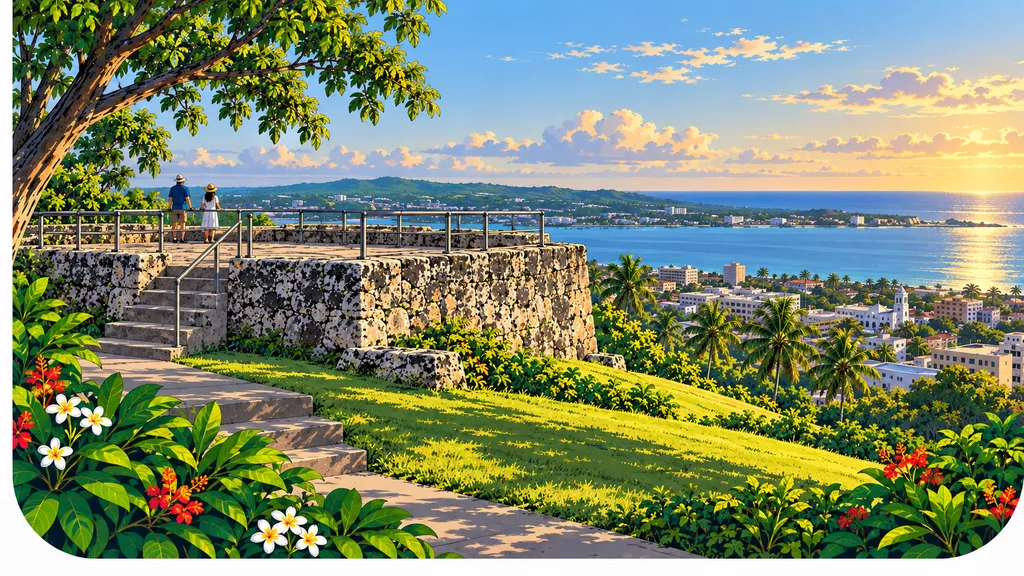
Fort Santa Agueda, also known as Fort Apugan, is the remnant of a masonry fort on high ground above Hagåtña. The National Register of Historic Places documentation dates it to about 1800 during the Spanish period. Japanese forces later used the site as a gun position during World War II.
Do not expect a large castle. What remains is a low rectangular masonry structure and viewing area. The Guam Visitors Bureau describes the site as offering panoramic views of Hagåtña and the bay, making it a useful first stop for understanding the relationship between the city, hills and coast.
The site is close to a residential area. Never block a driveway or stop where parking is prohibited; follow signs and current access instructions. Steps and masonry may be slippery after rain. Because facilities and access can change, a daylight visit is the safer choice.
2. Asan Bay Overlook: scenery, memory and context
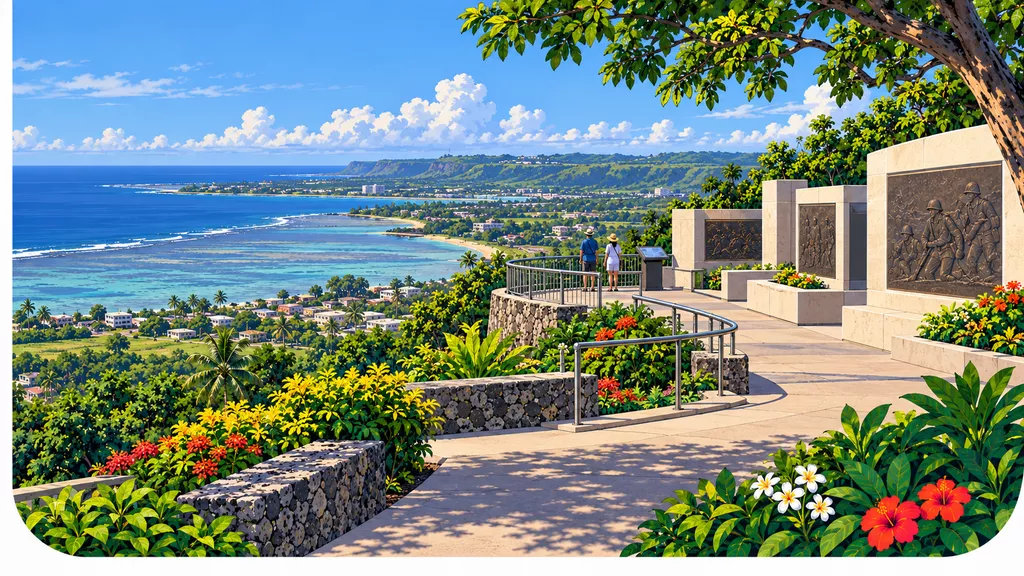
Asan Bay Overlook is part of War in the Pacific National Historical Park, managed by the U.S. National Park Service. From the elevated site you can see the coastal villages of Asan and Piti and the beaches used by U.S. forces during the 1944 Battle of Guam.
This is more than a photo stop. Completed in 1994 for the battle’s 50th anniversary, the site includes landscaped paths, viewpoints, bronze reliefs and a Memorial Wall of Names honoring U.S. service members and Guam residents who died or suffered during the war. Visit quietly and do not climb on memorials, walls or artwork.
The National Park Service currently lists the overlook as open 24 hours a day, seven days a week, with parking beside Route 6. That does not guarantee lighting, good weather or uninterrupted access at all times. Daylight is best for reading the exhibits and walking safely, and current park alerts should take priority.
3. Fish Eye Marine Park: see Piti Bay’s reef without getting wet
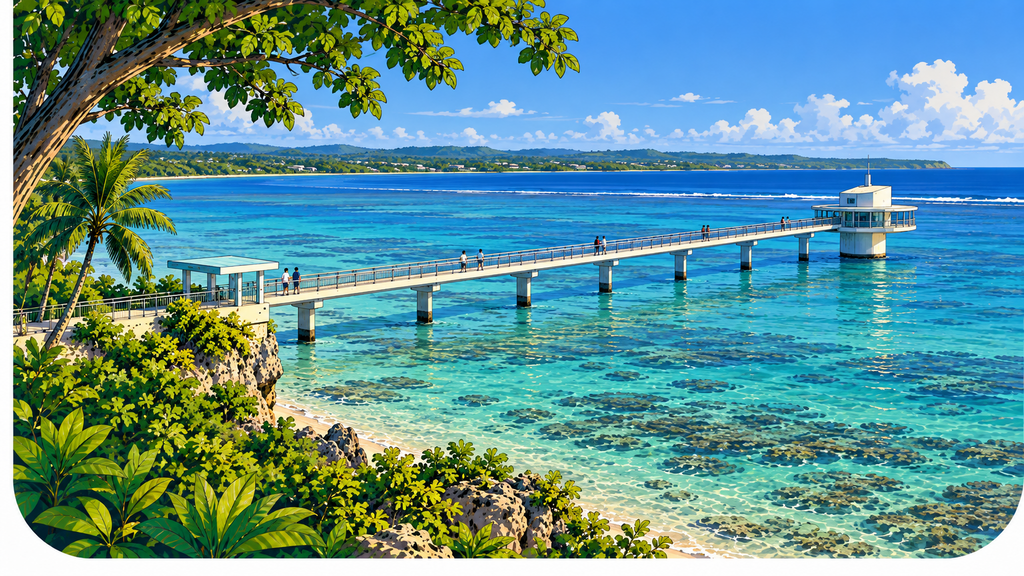
Fish Eye Marine Park is a visitor attraction on Marine Corps Drive (Route 1) in Piti. A long pedestrian bridge leads over the reef to an underwater observatory. From the viewing chamber, visitors can watch coral and tropical fish through windows without entering the water. Because this is a natural marine environment, visibility and the number or type of fish vary with weather and sea conditions.
The underwater observatory is a paid attraction. Fish Eye’s official website lists the address as 818 N Marine Corps Drive, Piti, and general facility hours as 9:00 a.m.–5:00 p.m. Program schedules, check-in deadlines, prices and closures can differ, so confirm the current details before driving there.
Secure hats and loose items on the exposed bridge, remain behind the railings and follow staff instructions. Access to the lower viewing chamber involves stairs; travelers with mobility concerns should check current accessibility arrangements directly with the facility.
Six rules for a safer scenic drive
- Take photos only after parking: stop completely in an authorized space before looking at the scenery or using a phone
- Keep right: remain centered in your lane and never cross the yellow center line on a curve
- Do not make sudden corrections: if you miss an entrance, continue safely and let navigation recalculate; never reverse on the road
- Prepare for squalls: slow down, increase following distance and turn on headlights early when rain reduces visibility
- Leave the cabin visibly empty: do not leave bags, cameras or shopping items where they can be seen
- Allow extra time: never speed because an attraction’s last admission is approaching
Before-you-go checklist
- Save all three stops and verify each entrance in your navigation app
- Confirm Fish Eye’s hours, latest check-in, price and reservation conditions
- Review National Park Service alerts, the weather and current road conditions
- Check fuel and pack drinking water, sunglasses and walking shoes
- Plan to return to a familiar area before darkness
Frequently asked questions
Can I visit all three stops in one day?
Yes, they can fit into a half-day, but a Fish Eye activity can add substantial time. Set your departure around the reservation or latest check-in and avoid rushing the historical stops.
Can I visit Asan Bay Overlook at night?
The National Park Service lists it as open 24 hours. First-time visitors, however, will find the exhibits, paths and view easier to understand in daylight. Check for weather-related or temporary park alerts before going.
Is Fish Eye free if I only want to look?
Entry to the underwater observatory is paid. Packages and prices can change, so check the official website for current options before departure.
Summary
Linking Fort Santa Agueda, Asan Bay Overlook and Fish Eye Marine Park brings together Hagåtña’s cityscape, Guam’s wartime history and the underwater scenery of Piti Bay. Enjoy the views only after parking safely, confirm current facility and road information, and plan the route as an unhurried half-day drive.
Information checked against the U.S. National Park Service, National Register of Historic Places, Guam Visitors Bureau and the official Fish Eye Marine Park website. Follow current road signs, park alerts, staff directions, weather and sea-condition notices.

