(This is an older post. The information reflects conditions at the time it was originally published — stores, prices and promotions may have changed since then. Please check our official website or on-site signage for current details.)
One of the hardest questions I’ve been asked is, “What is your
favorite food?” In my experience as a foodie it’s really not that easy to pick
just one. But if you were to ask me instead what it is that I crave the most
often, I would say that it’s the local foods here on Guam. A plate of
barbeque, kadon pika, red rice and a side of kelaguen is usually the image that
forms in my head, leading to that rumble in my stomach which sparks that
resolute desire only satisfied once I’ve leaned back from the table, smug and
fulfilled, with a once-full plate now empty in front of me.
While there are definitely many more foods featured in Guam’s
culture and cuisine, these are what I consider to be the 5 Foods You Must
Eat on Guam.
Red Rice
For centuries, rice has been a fixture in Guam’s food and
culture. It is a staple and a necessary part of the meal at any party or
gathering. Red rice has similarities to Spanish rice which makes sense, as the
main ingredient, the achote seed, most likely came from Mexico and was
first introduced to the Chamorro people by the Spanish.
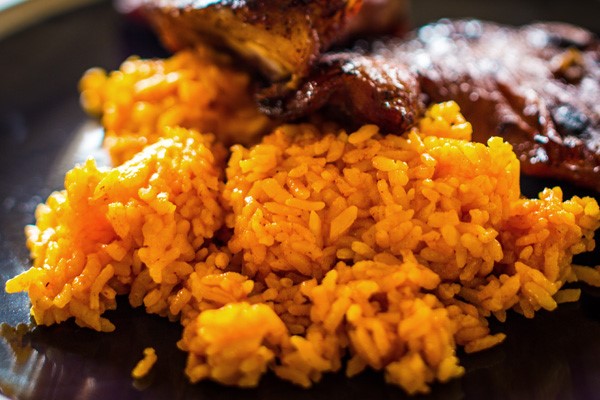
The achote seeds are soaked in water and the rice is then
cooked in the water giving it a deep red or bright orange color, depending on
how long the seeds are soaked. Other ingredients such as onions and garlic are
often used to infuse more flavor. Altogether it brings a wonderfully
subtle earthiness to the rice and makes for a visually appealing side dish to
your meal.
Kelaguen
Chamorros are known for their kelaguen-making skills and this
food is a signature local dish. Kelaguen is based around the cooking
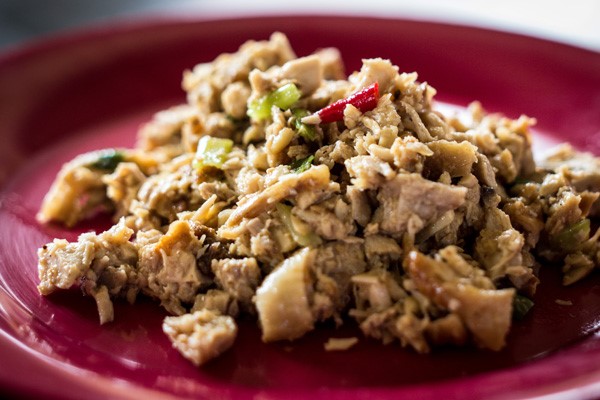
property of lemon juice and has similarities to ceviche. A combination of lemon
juice, onions, local hot peppers, salt and sometimes grated coconut are used to
“kelaguen” either seafood, beef, chicken or even Spam.
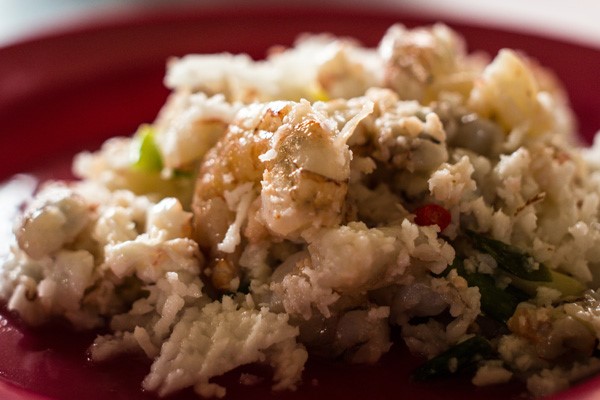
Chicken is the most popular meat chosen to “kelaguen” and tastes the best when it is barbequed beforehand. Octopus or squid kelaguen can be harder to find but are especially delicious and are definitely some of the best types of kelaguen. The tanginess of the lemon juice combined with the spicy kick of the peppers infused into the meat of your preference creates a sensational dance of flavors in your mouth that will have you instantly craving for more.
Barbeque
As controversial as it may be, I’m just going to go ahead and
say it: Guam’s barbeque is The Best Ever. That’s right, ever. There, I
said it. Of course, this is all based on my own opinion and personal
preference. The local barbequing process begins usually about a day before the
actual grilling. The reason for this is to allow time for the meat to marinate.
The most common way to marinate meats for a barbeque involves a combination of
soy sauce, vinegar, salt, black pepper, onions and garlic. While these are the
main ingredients for a good marinade, most cooks have a secret ingredient or
two that they like to add.
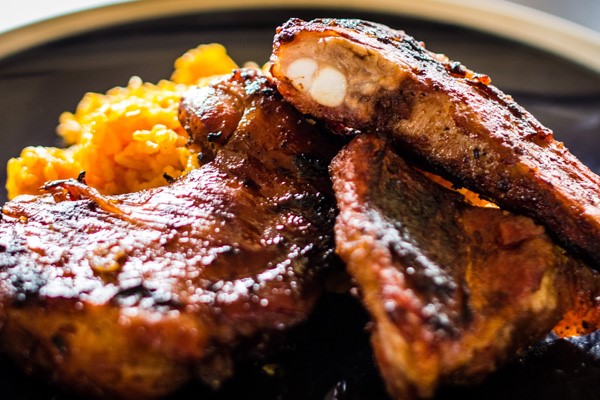
This marinade can be used for a vast array of different meats
but the most commonly used in local barbeque are chicken and spare ribs. The
best barbeque is grilled using the tangan-tangan wood found throughout Guam’s
landscape which provides a unique smoky flavor. In the end, the meat is
perfectly accentuated by the marinade and the smoky flavor is unforgettable.
Kadon
Pika
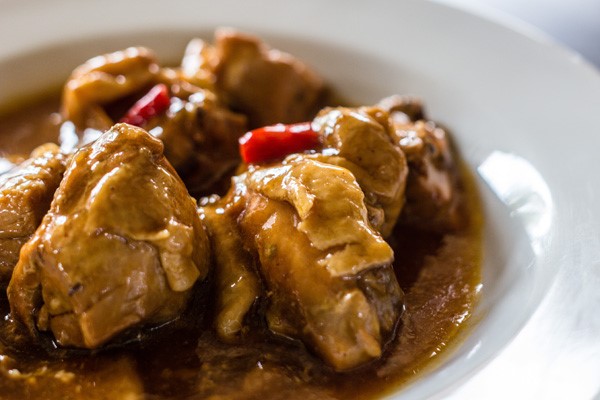
Kadon Pika is one of my favorite local dishes. The Chamorro word
“kadon,” when translated, means stew and the word “pika” means spicy.
So altogether we get a spicy stew. Most often this stew is made with
chicken as the main feature. The other ingredients include soy sauce, vinegar,
salt and black pepper, onions, garlic, local hot peppers and last, but most
certainly not least, coconut milk. The chicken is marinated in the combination
of the above ingredients excluding the hot peppers and the coconut milk. Those
are added after it has simmered for a good while. When ladled upon a nice
bed of red rice, bite into the warm, tender chicken and the spicy peppers will
clash against the sweet, creaminess of the coconut milk to bring you the
perfect local comfort food.
Coconut
Candy
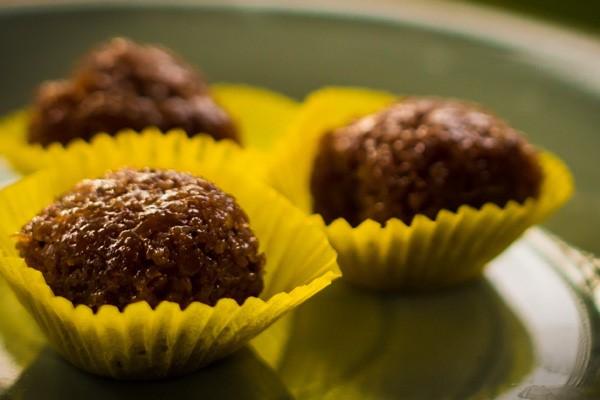
As simple as coconut candy is, it is delicious. It is basically
a combination of sugar and freshly grated coconut. The sugar is heated and
melted down, the coconut is added and once it is cooked to the proper
consistency it is then formed into balls or rectangles. A demonstration of how
the ancient Chamorros made coconut candy can be seen at the Gef Pa’go Cultural
Village in the southern village of Inarajan. It is a nice
little confection to treat yourself to and it often comes in small pieces so
you can enjoy it without feeling too guilty about the indulgence.

