A Guam shower can pass quickly, but not every rainy day is a harmless tropical sprinkle. A rental car gives you flexibility; it does not make severe weather safe. Use nearby indoor stops in light rain, and stay where you are when thunder, heavy rain or flooding threatens.
This guide explains how to use the Guam Museum, Fish Eye Marine Park and shopping facilities as realistic rainy-day options. It is not a fixed route that must be completed. Choose the closest safe destination based on your current location, official alerts and actual road conditions.
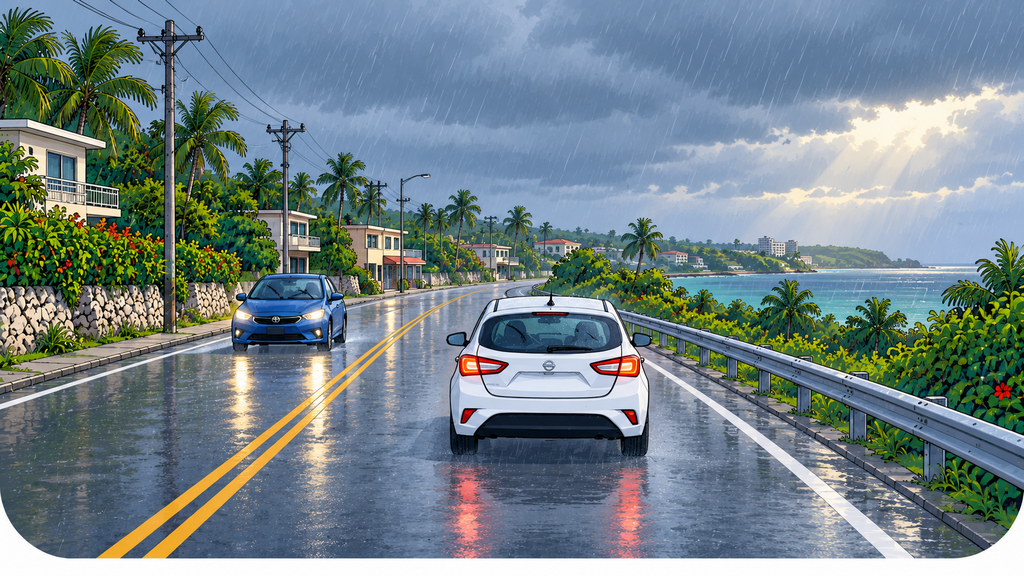
Start by classifying the weather
- Brief shower or light rain: check visibility and road conditions, then use a nearby indoor attraction
- Heavy rain or thunder: remain inside your current building and cancel cross-island sightseeing
- Flood advisory, warning or water across the road: do not set out and never drive around a barrier into floodwater
Before driving, check the National Weather Service Guam and Guam Homeland Security / Office of Civil Defense. Look beyond a simple rain icon: review thunderstorm, flood, wind and marine alerts, as well as road closures.
1. Guam Museum: learn about CHamoru history and culture indoors
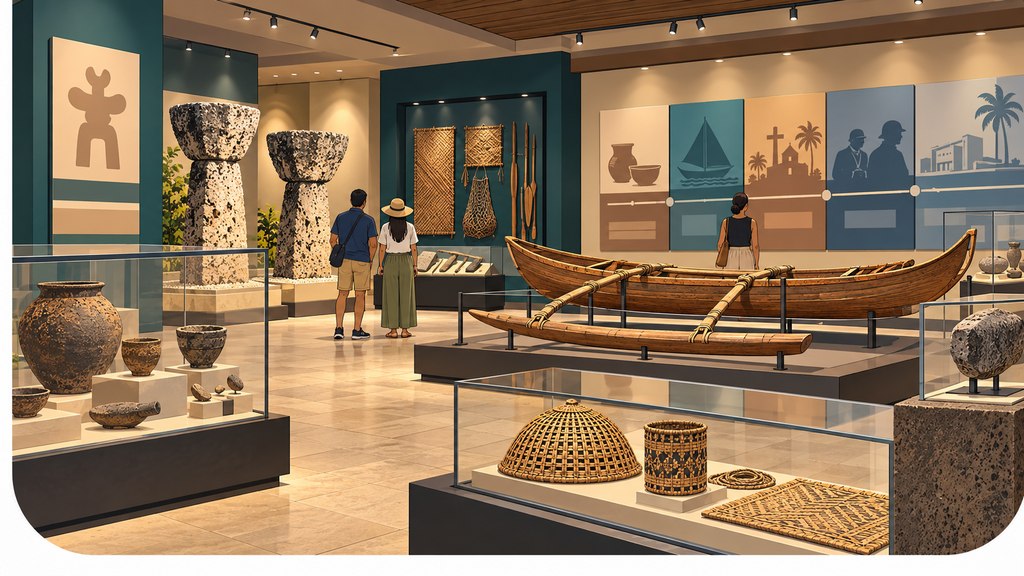
The Senator Antonio M. Palomo Guam Museum and Chamorro Educational Facility in Hagåtña presents Guam and CHamoru history and culture indoors. According to the Guam Visitors Bureau, the permanent “I Hinanao-ta” exhibition spans seven galleries and uses more than 300 objects, images, audio and short films to tell the island’s story. Core panels are in English and CHamoru, with QR-based Japanese, Mandarin Chinese and Korean support.
Hours require care. The Guam Visitors Bureau currently lists general exhibit hours as Tuesday–Friday, 9:00 a.m.–4:00 p.m.; Saturday, 10:00 a.m.–2:00 p.m.; and closed Sunday and Monday. The Department of CHamoru Affairs separately lists Monday–Friday, 8:00 a.m.–5:00 p.m. for its administrative office. Office hours are not necessarily museum admission hours, so confirm same-day exhibit access by phone or an official notice, especially on holidays or event days.
2. Fish Eye Marine Park: an option only in mild conditions
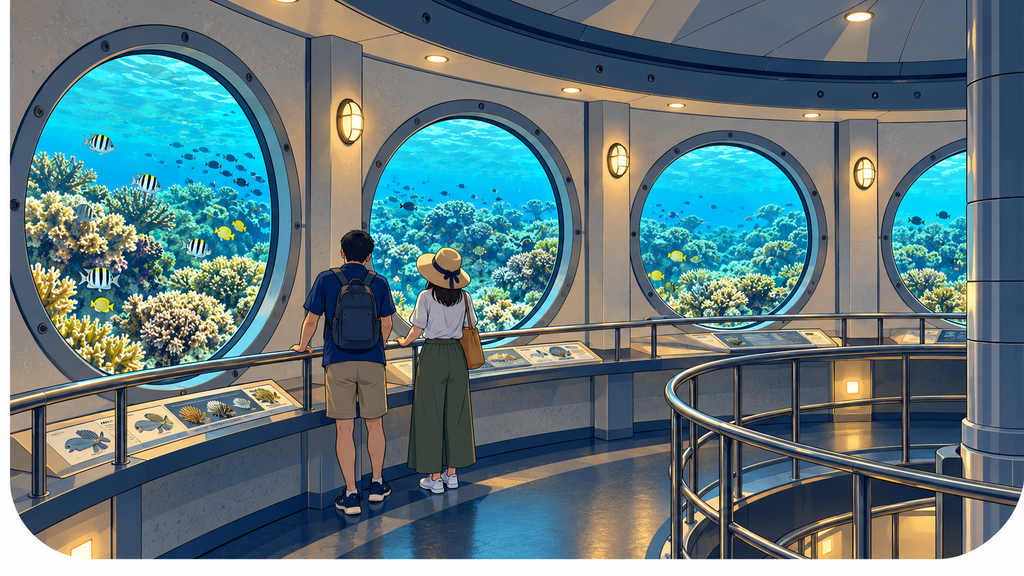
At Fish Eye Marine Park in Piti Bay, visitors can look through the underwater observatory’s windows at coral and tropical fish. The viewing chamber is dry, but reaching it requires a walk along a long, exposed sea bridge. Fish Eye is therefore not completely protected from the weather.
The official site lists general facility hours as 9:00 a.m.–5:00 p.m. The underwater observatory is paid, and operating days, check-in times, prices and reservations can vary by program. Because you are viewing a natural marine environment, visibility and the species or number of fish seen can change after rain.
Consider it only during light rain when there are no thunderstorm, strong-wind or high-surf concerns and the facility confirms normal operation. On the bridge, a rain jacket is safer than struggling with an umbrella in the wind; follow staff instructions at all times.
3. Nearby shopping: wait out the rain without crossing the island
When rain lasts longer, a large shopping center or commercial complex close to your current location is a practical place for a meal and shopping. Indoor facilities are available around Tumon, Tamuning and Dededo, but store hours, closing days, covered parking and the walk from the car differ by property.
There is no need to drive across Guam simply because another mall is larger. Program navigation before departure and use a marked parking space. Even covered entrances can have wet, slippery floors. Keep bags, cameras and purchases out of sight when leaving the vehicle.

Do not treat Talofofo Falls Park as a rainy-day fallback
Even if a southern drive was on your itinerary, do not assume Talofofo Falls Park is suitable in rain simply because the cable car is covered. The falls, park paths and boarding areas involve outdoor exposure, and safety takes priority over scenery during heavy rain or lightning. If a flood advisory or warning affects southern Guam, or water is collecting on roads, postpone the trip.
The same principle applies to beaches, overlooks, waterfalls, trails and marine facilities. A roof over one section does not make an outdoor attraction weatherproof. If you see lightning, hear thunder or receive a closure notice, remain indoors.
Eight rules for driving in Guam rain
- Reduce speed: the posted limit is not a target; drive slowly enough for the visibility and surface
- Increase following distance: Guam Homeland Security advises slower speeds and enough braking distance during stormy weather
- Turn on headlights: improve both your view and your visibility to other road users
- Avoid abrupt inputs: brake, steer and accelerate smoothly, and slow before a curve
- Stay centered in the right-hand lane: never cross the yellow center line to avoid a puddle; slow safely instead
- Clear fogged glass: use air conditioning and defrosters to maintain a full view around the vehicle
- Never enter floodwater: depth and road damage cannot be judged by sight; turn around and find a safe route
- Stop if you cannot see: enter a safe parking area and wait; do not stop in a travel lane or on a narrow shoulder
Check the car and information before departure
- Wipers, headlights, brake lights and defrosters operate normally
- No tire-pressure or other warning light is illuminated
- You have enough fuel and phone battery
- You checked NWS Guam, GHS/OCD and official facility updates
- The entrance and authorized parking area are set before moving
If the wipers or lights are not working correctly, do not drive away; contact the rental company.
Frequently asked questions
Can I still drive around southern Guam as planned?
You may reassess after a brief shower passes, but cancel a long southern drive during heavy rain, thunderstorms or flood alerts. Official warnings and road closures take priority over bookings.
Is Fish Eye guaranteed to be enjoyable in the rain?
No. The chamber is indoors, but the bridge is exposed and underwater visibility depends on conditions. Check thunder, wind, surf and facility operations, and postpone when necessary.
Can I drive through shallow-looking water?
No. The National Weather Service warns drivers never to enter a flooded road or go around barricades. You cannot reliably judge water depth or whether the pavement underneath has failed.
Summary
For a rainy day in Guam, first check the intensity and official alerts. Choose the nearby Guam Museum, Fish Eye only under suitable conditions, or a nearby indoor shopping facility. During thunder, heavy rain or a flood threat, the correct use of a rental car is not to travel but to remain in a safe building. Slow down, increase following distance, use lights and maintain clear visibility whenever driving is still appropriate.
Information checked against the Department of CHamoru Affairs, Guam Visitors Bureau, the official Fish Eye Marine Park website, National Weather Service Guam and Guam Homeland Security / Office of Civil Defense. Follow current warnings, road closures and staff directions.

