Most rental-car trips in Guam include at least one stop at a gas station. The process can feel unfamiliar because pumps use English prompts, fuel is sold by the U.S. gallon, and U.S. octane numbers follow a different rating method from the RON system used in many countries. This guide takes you from the checks before fueling through payment, pumping, and the final fill before returning the vehicle.
TAICO recommends Shell stations in Guam
TAICO recommends Shell for refueling in Guam. Shell has stations in multiple parts of the island, and IP&E’s official location pages provide current addresses, hours, and fuel products. Availability of Shell FuelSave, Shell V-Power Premium, and diesel varies by location, so check the listing for the station you plan to use.
Choosing Shell does not change the vehicle requirement: the rental car’s specified fuel always comes first. If it calls for regular unleaded, choose the corresponding main-grade unleaded product. Do not select premium or diesel unless the vehicle specifically requires it.
Three things to check before you refuel
- Required fuel: Check the rental agreement, in-car notice, fuel door, fuel cap, or owner’s manual.
- Return fuel level: Confirm the level specified at pickup, such as full-to-full.
- Fuel-door side: Check before entering the pump lane. On many cars, a small arrow beside the fuel-pump icon on the gauge points to the fuel-door side.
Do not assume that every rental car takes regular gasoline. Requirements vary among gasoline, diesel, and hybrid models, so the vehicle’s label and rental-company instructions come first.
Guam uses U.S. gallons and U.S. octane ratings
Fuel volume is measured in U.S. gallons, and prices are displayed per gallon. One U.S. gallon is about 3.785 liters. Five gallons, for example, is about 18.9 liters, although you can simply follow the dollar and gallon totals on the dispenser.
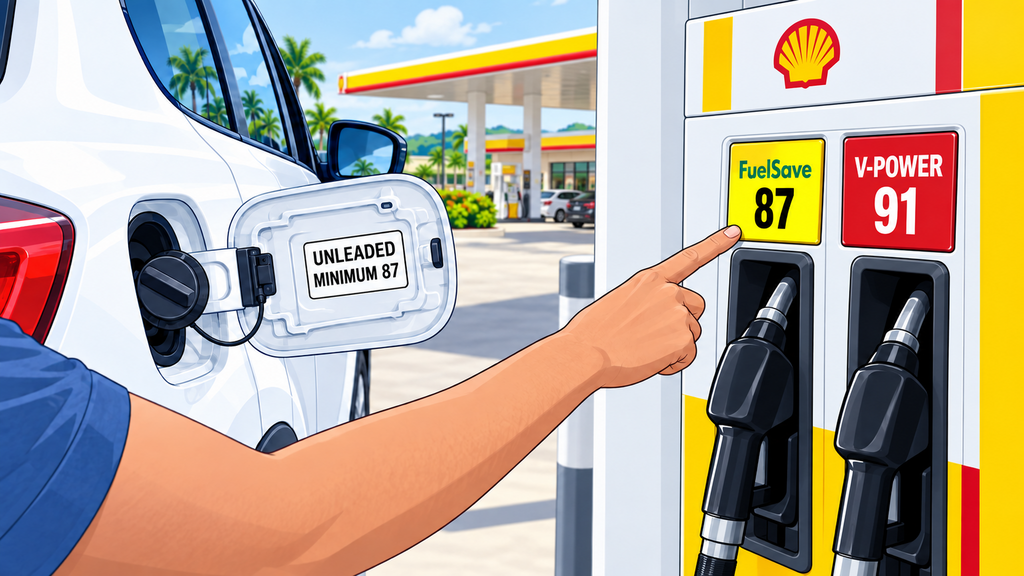
Gasoline buttons may show numbers such as 87, 89, or 91. In the United States, the displayed value is the Anti-Knock Index, or AKI—(R+M)/2—rather than RON. It therefore looks lower than the RON number familiar to drivers in Japan, Korea, and Taiwan, and the two figures should not be compared directly. If the vehicle specifies “MINIMUM 87,” select fuel that meets or exceeds that U.S. rating.
Choose by the label and rating, not nozzle color
Nozzle colors are not a universal fuel-code system. Do not assume that a particular color always means unleaded gasoline. Read the dispenser label and look for terms such as UNLEADED, REGULAR, MID-GRADE, PREMIUM, or DIESEL, together with the octane number. If anything is unclear, ask the attendant before removing a nozzle.
How to pump gas in Guam
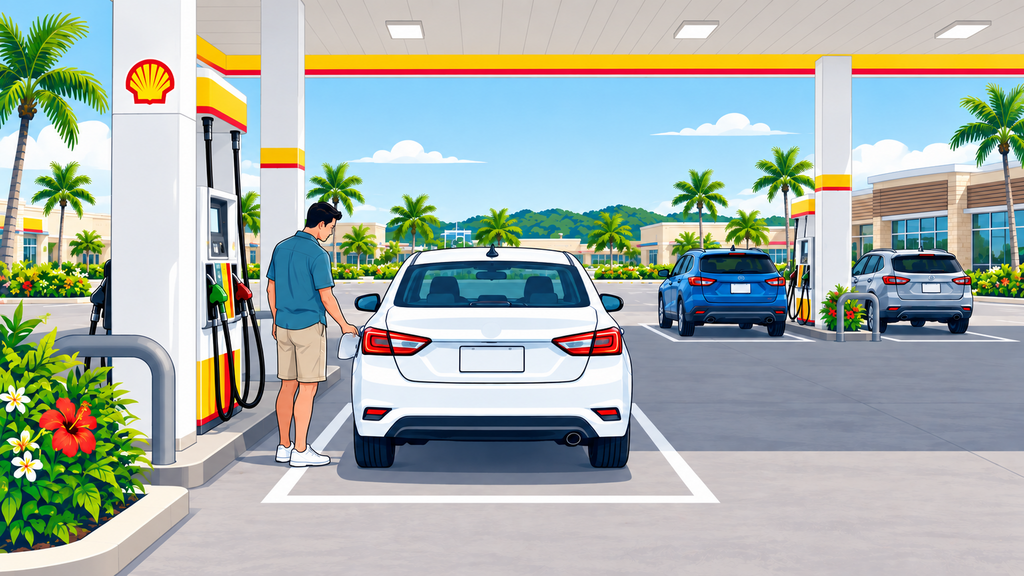
1. Stop with the fuel door beside the pump
Follow arrows and one-way signs on the forecourt, then approach an available dispenser slowly. Leave room around pillars and other vehicles and stop straight within the pump bay, with the correct side of the car next to the hose.
2. Turn off the engine
Shift into Park, set the parking brake, and turn off the engine. Do not smoke. Once fueling begins, avoid repeatedly getting back into the vehicle, which can allow static electricity to build up. Children should not operate the nozzle.
3. Pay at the pump or inside
Payment procedures vary by station and dispenser.
- Pay at Pump: Follow the screen to insert, tap, or swipe your card and enter any requested information. If the terminal requests a billing ZIP Code and does not accept an international card, pay inside instead.
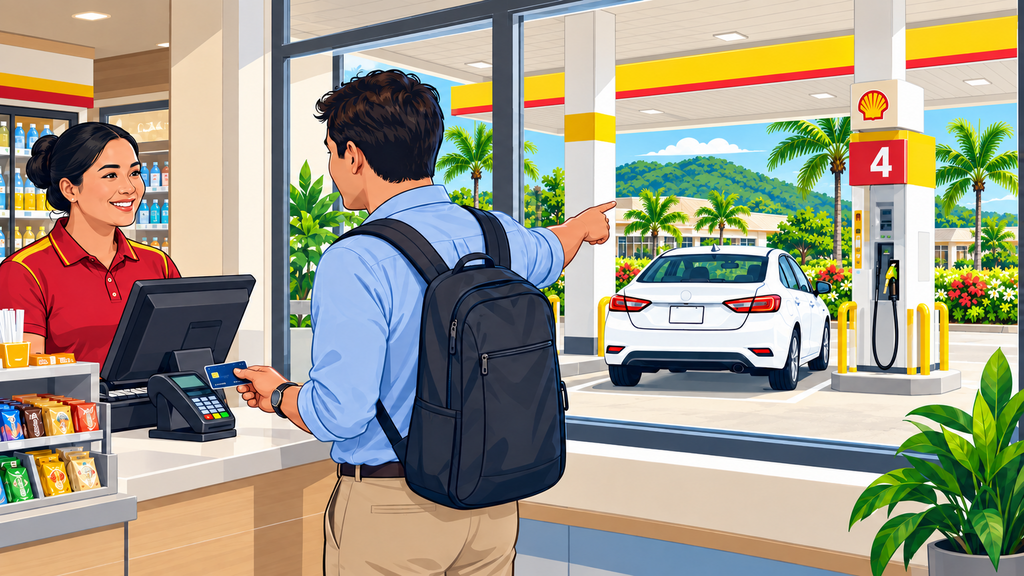
- Prepay Inside: Note the dispenser number, then tell the cashier the pump, fuel, and amount—for example, “Pump 4, regular, 40 dollars.”
A card may show a temporary authorization hold separate from the final fuel charge. The release timing depends on the card issuer. If you use less than the prepaid amount, follow the station’s screen or cashier instructions to complete the transaction or settle the balance.
4. Select the fuel required by the vehicle
After payment or authorization, press the button for the correct fuel grade. Some dispensers use one nozzle for several gasoline grades; others have separate nozzles. Read every label before making a selection.
5. Insert the nozzle and begin fueling
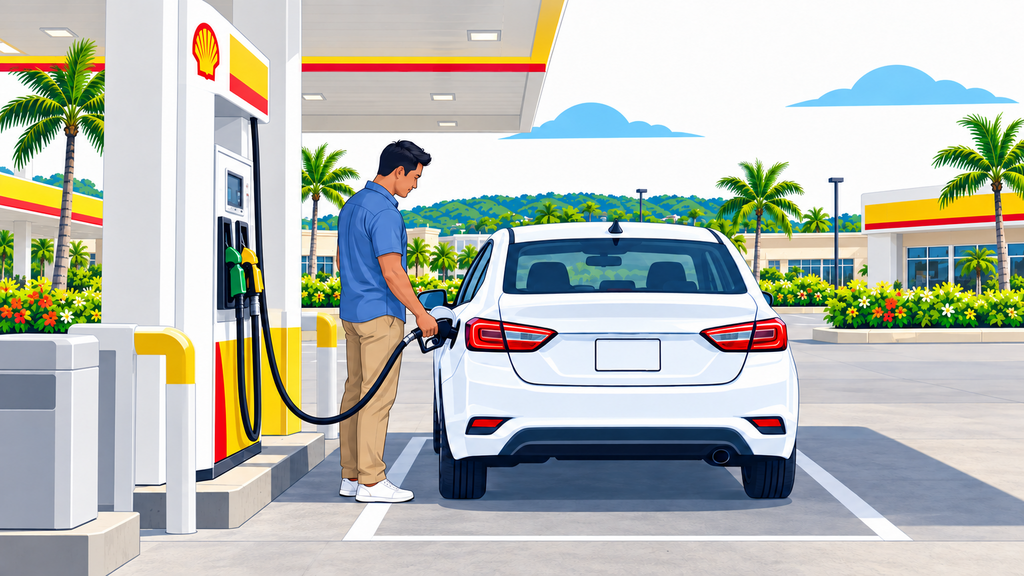
Open the cap, insert the nozzle securely, and squeeze the handle. Confirm that the gallon and dollar counters are moving, remain beside the nozzle, and wait for the automatic shutoff.
6. Stop at the first automatic click
Do not repeatedly squeeze the handle after the nozzle shuts off. “Topping off” can spill fuel and interfere with vapor-control systems in the vehicle or dispenser. Remove and return the nozzle after the first automatic stop.
7. Close the cap and collect the receipt
Tighten the fuel cap, close the fuel door, and collect a receipt if needed. Confirm that the transaction has ended before driving away. For a return-day fill, keeping the dated receipt until the vehicle is checked in can be helpful.
Buying a set dollar amount or filling the tank
For indoor prepayment, you may be able to request a fixed amount such as 20 dollars. If the rental must be returned full, guessing the exact remaining cost is less reliable than asking the cashier how that station handles a “fill up.” Fuel prices change frequently, so use the current roadside sign and dispenser price rather than a fixed price quoted online.
If you select the wrong fuel
If you put in the wrong fuel—or think you may have—do not start the engine. Contact station staff and the rental company immediately and follow their instructions. Driving can circulate the fuel through the system and increase the extent of the damage.
If fuel spills, do not start or move the vehicle. Keep ignition sources away and notify station staff immediately. Follow the facility’s emergency instructions.
Frequently asked questions
Can I use a credit card?
Accepted cards and payment methods vary. An international card that fails at the dispenser may still work with the cashier. Carrying a second card and a small amount of U.S. cash provides a useful backup.
Should I choose regular or premium?
Use the grade specified for the vehicle. If you cannot find the requirement, contact the rental company before fueling. A more expensive grade does not automatically improve performance in a vehicle that does not require it.
How do I know when the tank is full?
Finish when the nozzle automatically shuts off for the first time. There is no need to top off to reach a round dollar amount.
How can I check station hours?
Hours vary by location and day, so check current signage or the station’s official information. For an early or late rental return, refuel while a suitable station is open instead of waiting until the last moment.
Summary
Refueling in Guam is manageable once you confirm the vehicle’s fuel, align the fuel door with the dispenser, note the pump number, and understand the payment method. The key safeguards are to read labels instead of relying on nozzle color, understand the U.S. octane display, switch off the engine, and stop at the first automatic click. Check the return requirement and leave enough time for the final fill.
Station and fuel information is based on the IP&E Shell Guam location directory. Units, ratings, and safety information are based on the FTC Fuel Rating Rule, U.S. EPA guidance on topping off, and the NIST conversion table, checked in September 2026. Follow the vehicle label, rental agreement, dispenser prompts, and station staff instructions.

