A rental car gives you the freedom to travel beyond Tumon to Hagåtña, scenic overlooks, beaches and Guam’s southern villages on your own schedule. Driving is generally straightforward, but island-specific road conditions and rules can surprise even experienced U.S. drivers.
This guide covers the essentials for driving in Guam: speed limits in mph, right turns on red, school buses, the center lane, tropical rain, mobile-phone rules and driver’s-license requirements. Traffic rules can change, so always follow current signs, signals and directions from law-enforcement officers.
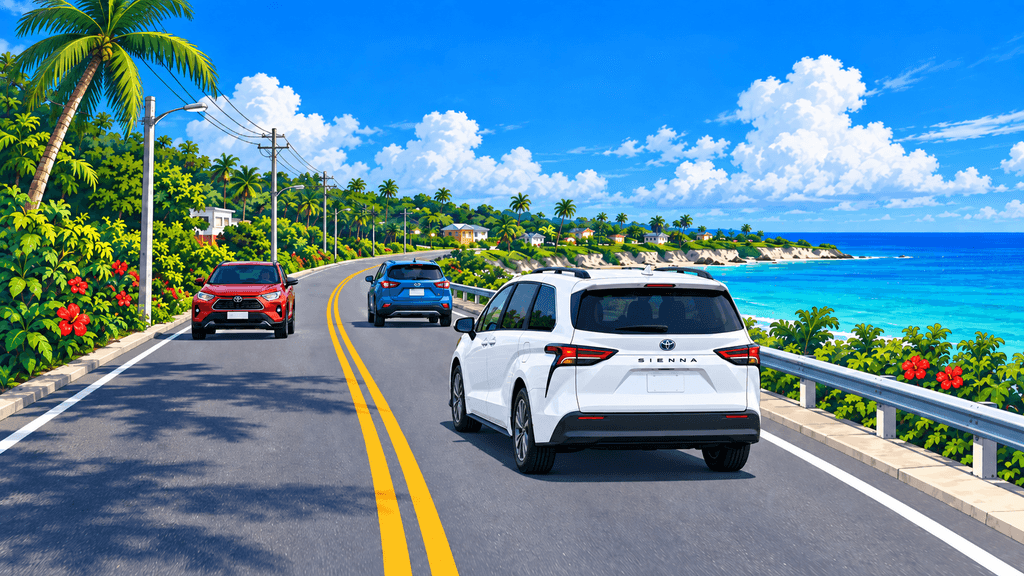
Guam driving rules at a glance
- Drive on the right; most vehicles are left-hand drive.
- Speed limits are posted in miles per hour (mph).
- A right turn on red requires a complete stop and a clear path.
- Do not turn when a sign or signal prohibits a turn on red.
- Stop for a school bus loading or unloading children, including when approaching from the opposite direction.
- Do not use the yellow center lane as a travel or passing lane.
- Slow down and increase following distance in rain; coral-aggregate pavement can become very slick.
Right-hand traffic and turning into the correct lane
Guam drives on the right, as in the continental United States. For visitors from Japan or other left-driving countries, the greatest risk is often immediately after a turn or when leaving a parking lot. Keep the driver’s side toward the center of the road: make right turns into the rightmost available lane and finish left turns on the right half of the road you are entering.
Before moving, adjust the mirrors and seat, locate the lights and wipers, and take a moment to understand the gear selector and parking brake. Signal before changing lanes, check the mirrors, and look over your shoulder for the blind spot.
Right turn on red: stop first, then yield
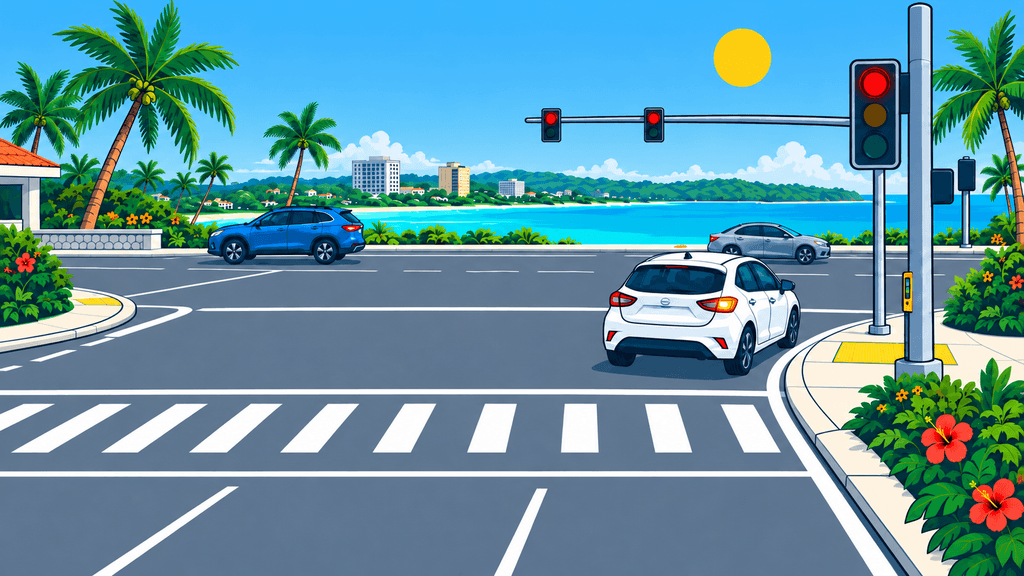
After coming to a full stop at the stop line or before the crosswalk, you may turn right on red when the path is clear. Yield to pedestrians and all traffic moving with the signal. A red light never gives the turning vehicle priority, and you do not have to turn if visibility is poor or you do not feel it is safe.
Do not turn where a “NO TURN ON RED” or “NO RIGHT TURN ON RED” sign is posted, or where a red arrow or other signal prohibits the movement. Unless signs or markings indicate otherwise, begin and complete the turn in the far-right lane.
Guam speed limits and mph-to-km/h conversions
Speed-limit signs use mph. Guam’s official driver’s handbook states that speeds above 45 mph are unlawful, but the posted limit for each road or zone controls and is often lower. Common conversions are:
- 15 mph: about 24 km/h
- 25 mph: about 40 km/h
- 35 mph: about 56 km/h
- 45 mph: about 72 km/h
Limits can change near schools, villages, work zones and intersections. Follow the most recent posted sign rather than matching the speed of surrounding traffic. Slow further whenever rain, darkness, congestion or road conditions make the posted speed unsafe.
Roads visitors commonly use
Route 1, Marine Corps Drive, is Guam’s principal north-south corridor and connects areas including Tamuning and Hagåtña. It can become busy during commuting hours and around major intersections. Route 14, Pale San Vitores Road, runs through the Tumon hotel district, where drivers should expect pedestrians, crosswalks, buses and frequent vehicles entering and leaving hotels and shopping areas.
Route 10A serves the airport area. Allow extra time for refueling, rental-car return and terminal access. Road names may appear alongside route numbers, so confirm both the destination and route in your navigation app before leaving.
Never pass a stopped school bus
When a school bus stops to receive or discharge passengers, drivers approaching from either direction must come to a complete stop and may not pass until children in the immediate area have reached safety. Watch for flashing red lights and the bus’s extended STOP arm, and leave ample space.
STOP signs and stop lines
At a STOP sign, stop before the limit line. If there is no line, stop before the crosswalk or before entering the intersection. When buildings, vegetation or parked vehicles block your view, stop at the required point first, then edge forward slowly and check again. Do not block a crosswalk while waiting.
How to use the yellow center lane
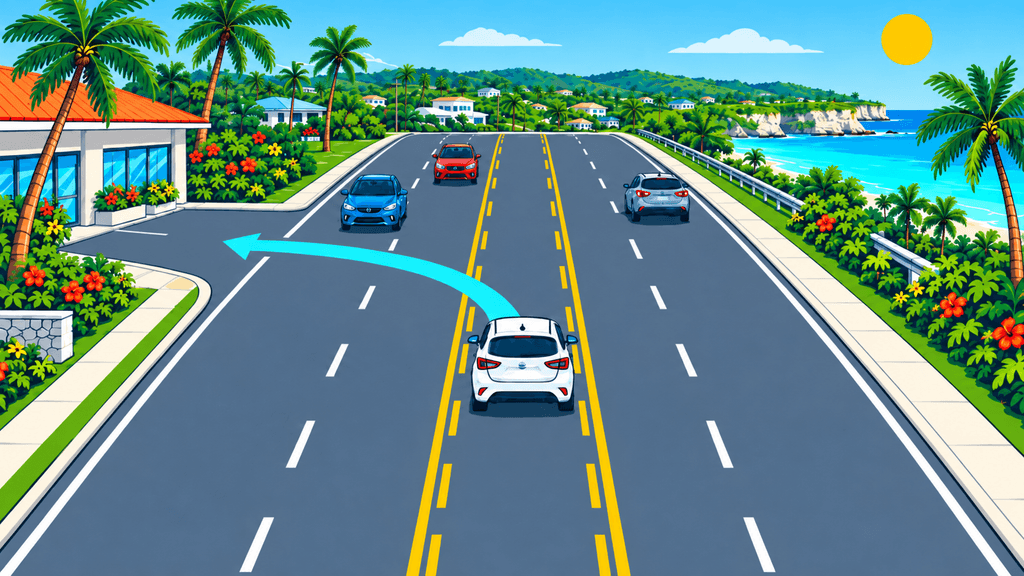
On Route 1 and other multi-lane roads, you may see a lane enclosed by yellow lines in the middle of the road. Drivers traveling in either direction may enter it briefly when turning left across traffic into a store, driveway or side road. A driver leaving a property may also use it briefly while making a left turn and waiting for a safe gap to merge into the travel lane.
Because left-turning vehicles may enter from both directions, the center lane is not a normal travel lane, passing lane or place to wait for an extended period. Signal, check both directions and use it only for the turn. Signs and pavement markings at the location always take priority.
U-turns are not legal everywhere. Do not make one at a signal-controlled intersection unless a sign specifically permits it, near a curve or hill with limited visibility, or wherever a sign prohibits it. When in doubt, continue to a safe place and turn around without forcing the maneuver.
Wet roads: Guam’s coral aggregate can be slippery
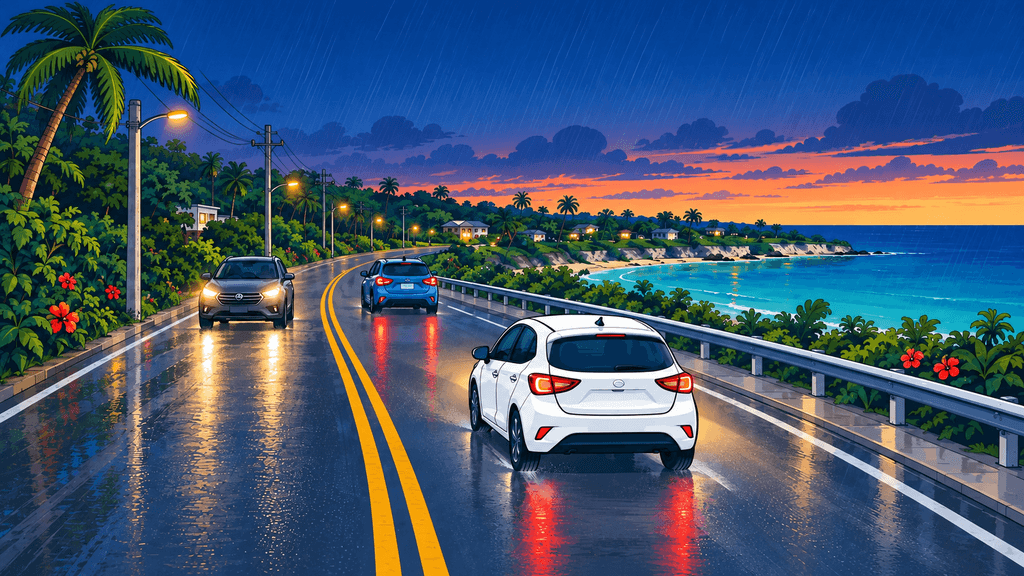
Guam roads are built with coral aggregate that can become extremely slippery when wet. Tropical showers can arrive quickly, reduce visibility and create deep standing water. The first part of a rainfall can be especially hazardous as water mixes with material on the road surface.
- Reduce speed and increase following distance.
- Avoid sudden braking, acceleration and steering.
- Use headlights in heavy rain so other drivers can see you.
- Do not enter standing water when you cannot judge its depth.
- Avoid unnecessary driving during typhoon conditions or official warnings.
Be extra cautious on hilly, curving stretches
Guam has substantial hill terrain, and rain makes hilly, winding sections especially demanding.
- Route 17 (Cross Island Road, between Santa Rita and Yona): a mountainous route with continuous sharp curves. Slow down well before any steep downhill section.
- The hills around Agana Heights and Sinajana: steep roads south of Hagåtña that are known to flood during heavy rain.
- The Nimitz Hill area: a hilly region where visibility can drop sharply in heavy rain.
On sloped terrain, signs such as ground cracks, leaning trees or a sudden change in water flow can indicate a landslide risk—stay away from such areas. Standing water on a road is often deeper than it looks: as a general guide, around 6 inches (15 cm) of moving water can knock a person down, and around 2 feet (60 cm) can float and sweep away a vehicle. Never drive into water when you cannot judge its depth.
Do not hold a phone—even while stopped in traffic
Guam law prohibits holding or using a mobile phone to read, write or send messages while driving. “Driving” includes being temporarily stopped at a red light or in traffic. Set navigation before departure. If you need to change it, move off the highway and stop where the vehicle can safely remain stationary. Proper hands-free voice use is allowed for licensed drivers; emergency calls are also exempt.
Seat belts and child restraints
The driver and all passengers must wear seat belts. A child under age four must ride in a federally compliant child-restraint system. A child age four through eleven who is under 4 feet 9 inches (approximately 145 cm) must also use an appropriate child restraint or booster. Give the rental company the child’s age, height and weight when reserving equipment.
Alcohol in the vehicle
Driving under the influence is strictly prohibited, and drinking alcohol in a vehicle on a highway is unlawful. Do not allow passengers to drink while the vehicle is moving. Keep any opened alcohol out of the passenger compartment; if it must be transported, secure it in the trunk or a separate cargo area. Use a designated driver, taxi or another transportation option whenever alcohol is part of your plans.
Pedestrians and emergency vehicles
Expect pedestrians in and around Tumon, including after dark. Approach crosswalks cautiously and yield as required. If an ambulance, fire engine or police vehicle approaches with a siren or flashing red or blue light, yield, move as close as practicable to the right edge of the road away from an intersection, and stop until it passes. Call 911 in an emergency.
Night driving outside Tumon
Street lighting becomes limited on parts of the island outside the main commercial areas, and lane markings can be harder to see in rain. Reduce speed, watch for pedestrians, animals, potholes and narrow shoulders, and use low beams around other vehicles. If you are unfamiliar with the southern route, completing the drive during daylight is the more comfortable option.
What driver’s license do you need in Guam?
A valid license issued by a U.S. state, territory or commonwealth may be used for up to 30 days after arrival in Guam. Guam law also allows valid licenses from specifically listed jurisdictions—including Japan, the Republic of Korea and the Republic of China (Taiwan)—for up to 30 days after arrival.
Carry the original license while driving. Rental companies may apply additional requirements for minimum age, years of driving experience, identification and payment, so confirm the terms of your reservation. Travelers licensed in a jurisdiction not specifically recognized by Guam law should verify requirements in advance and may need an International Driving Permit together with the original license. An IDP is a translation document, not a stand-alone license.
Before-you-drive checklist
- Carry your valid original driver’s license and required identification.
- Adjust the seat and mirrors and locate the lights, wipers and parking brake.
- Set your destination before moving.
- Secure every passenger and install the correct child seat.
- Check the fuel type and the side of the fuel door.
- For your first turns, consciously confirm that you are entering the right side of the road.
Frequently asked questions
Is driving in Guam difficult?
Most main roads are easy to follow, but drivers should pay special attention to wet pavement, the center lane, school buses and changing speed limits. Visitors accustomed to left-hand traffic should take extra care after turns.
Can you turn right on red in Guam?
Yes, after a complete stop and after yielding to pedestrians and cross traffic, unless a sign or signal prohibits the turn. Never turn simply because the driver behind you expects it.
Are Guam speed limits in mph or km/h?
They are posted in mph. For quick reference, 25 mph is about 40 km/h and 35 mph is about 56 km/h.
How long can I drive with an out-of-Guam license?
Qualifying valid U.S. and recognized foreign licenses may generally be used for up to 30 days from arrival. Keep the original license with you and check rental-company requirements before pickup.
Summary
The keys to safe driving in Guam are simple: obey posted mph limits, stop fully before turning right on red, give school buses and pedestrians plenty of space, and slow down as soon as rain begins. Understand how to use the center lane and keep your phone out of your hand, even at traffic lights.
With a careful start and awareness of Guam’s local road conditions, a rental car is one of the most convenient ways to experience the island beyond the hotel district.

