Northern Guam offers a different mood from the resort strip — coastal limestone and high cliffs over the Philippine Sea. With a rental car, you can visit Tanguisson Beach and Puntan Dos Amantes (Two Lovers Point) from Tumon in half a day.
Keeping the north to these two nearby stops makes for an easy, unhurried route — a good fit for a free afternoon during your stay, or a gap in your arrival or departure day.

Suggested half-day route
- Late morning to midday: a coastal stop at Tanguisson Beach
- Afternoon: Philippine Sea views at Two Lovers Point
- Before evening: return to Tumon
Both stops are close together, so this route pairs easily with other sightseeing, beach time or shopping elsewhere on the island. Adjust the order around surf conditions, squalls and sunset timing.
Check before departure
- Two Lovers Point hours, last admission and current fee
- Guam EPA beach advisories plus current surf, tide and weather
- Fuel, tires, drinking water, sun protection and rain gear
- Downloaded maps and the precise location of each destination
1. Tanguisson Beach: a flexible coastal stop
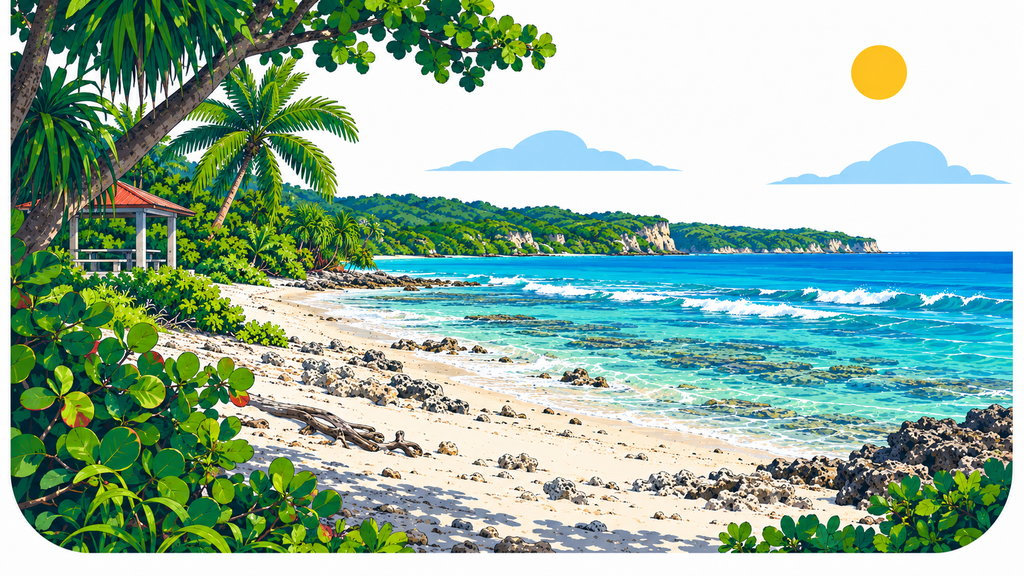
Tanguisson Beach lies on Dededo’s west coast. Parts of the shore contain coral rubble and rock rather than uninterrupted soft sand, so shoes with reliable grip are useful. Do not assume the water is always calm. Check current surf, tide, posted notices and Guam EPA water-quality advisories, and skip swimming whenever conditions are doubtful.
The mushroom-shaped rocks associated with this northern shoreline are not necessarily beside the casual beach stop. They are commonly reached by walking north toward Hila’an, which requires attention to tide, heat, footing and route-finding. Treat that as a separate prepared hike rather than a guaranteed feature of a quick Tanguisson visit.
2. Two Lovers Point: cliff views over the Philippine Sea
Puntan Dos Amantes (Two Lovers Point) is a northern Guam cliff associated with an ancient CHamoru legend. Guam Visitors Bureau identifies the water below as the Philippine Sea. The viewing facility opens a broad perspective over the coast and toward Tumon.
Admission may apply, and operating hours or last entry can change. Check the official information on the day of your visit, remain behind railings and never enter a closed cliff-edge area. Leave enough daylight for the drive back even when planning an afternoon view.

Driving tips for northern Guam
- Drive on the right and remain centered in the lane to the right of the yellow centerline
- Reduce speed for curves and changes in visibility
- Never stop in the road or on a narrow shoulder for photographs
- Obey all signs and staff directions at military, construction and private-property entrances
- In a squall, turn on headlights and increase following distance
- Set destinations while parked and carry an offline map
- Leave no luggage or valuables visible in the vehicle
Frequently asked questions
Can I cover the north in half a day?
Yes. With just Tanguisson Beach and Two Lovers Point, the driving distance is short enough for a relaxed half day, including time for ocean checks and a break at each stop.
Can a standard rental car make the trip?
A regular passenger car can be considered when the itinerary stays on open public roads and uses designated parking. Current closures, construction, damaged pavement or flooding take priority; never enter an unpaved side road or restricted area.
Are there places in northern Guam I should avoid with a rental car?
Yes. TAICO advises against driving rental cars toward the Ritidian area of Guam National Wildlife Refuge, due to crime targeting tourists, a high risk of flat tires on rough roads, and areas with no cell reception. Plan your northern Guam visit around Tanguisson Beach and Two Lovers Point instead.
Summary
A relaxed northern Guam drive pairs Tanguisson’s varied shoreline with the Philippine Sea panorama at Two Lovers Point. Check surf, water quality and daylight, and enjoy an unhurried half-day route.
Information sources: Guam Visitors Bureau and Guam Environmental Protection Agency. Current official notices, road signs, ocean conditions and on-site instructions take priority.

